In Almedalen Week’s packed programme, it’s easy to get lost in the noise. Here, we show you how to write headlines for seminars and events that spark curiosity and attract the right audience.
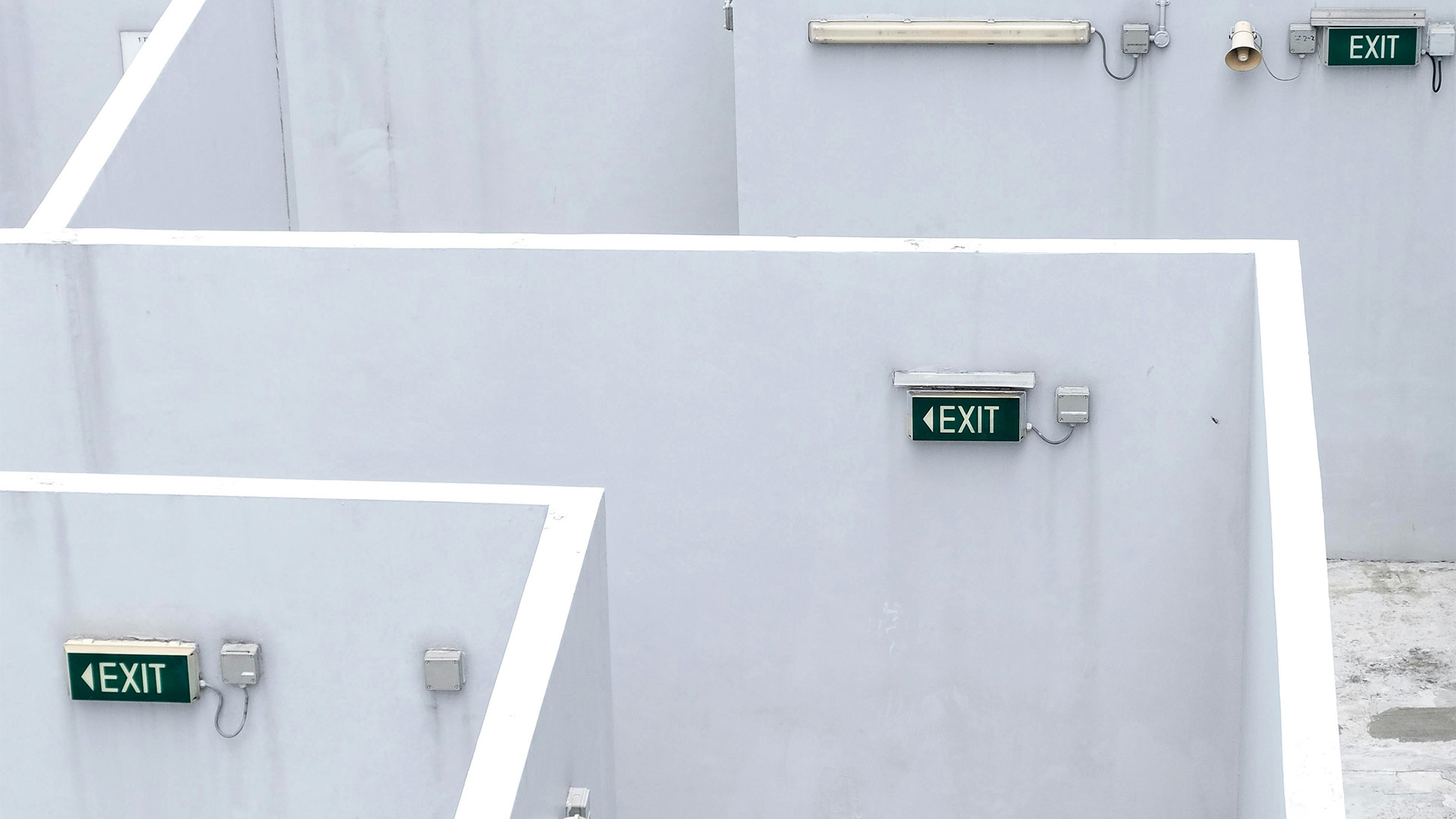
An invisible, closed door in the Almedalen Week programme
Almedalen Week, the annual political festival in Visby, brings together thousands of events every summer. With so many seminars and activities competing for attention, it’s easy to get lost in the noise – unless your headline stands out.
You’ve spent many hours – perhaps even days – planning your event. The content is interesting, the speakers are well-known and the topic is highly relevant. But when the programme is published, your event gets lost in the flood of others. Why?
One contributing factor may be that the headline gives no reason to pause – “could this be something for me?”. In the Almedalen Week programme, it is striking how many organisers miss this opportunity right from the very first point of contact with their target audience: the event’s headline. A headline that does not arouse curiosity, challenge or engage is like a door that is never opened. No matter how good the content behind it is.
This analysis (which is by no means scientific, but hopefully may spark some thought on the matter) is based on programmes from previous years. If this standard persists – how will you stand out in the programme for the next Almedalen?
Many event titles at Almedalen fail to reach their target audience
When I recently analysed the Almedalen Week programme, I found a clear pattern: many headlines follow one and the same – frankly rather dull – pattern. It is, of course, difficult to know exactly which headlines have attracted the largest audiences, but we can see which ones seem best placed to capture attention – and why.
A strong event headline isn’t just important for grabbing the reader’s attention – it also helps search engines understand what your event is about.
The three most common pitfalls:
- “How [abstract question]?”
- Example: “How is Swedish democracy faring?”
- Thoughts: This type of headline feels too passive and abstractly phrased. It’s hard to see what the visitor stands to gain from attending.
- “[Topic] – what’s the current situation and how do we move forward?”
- Example: “Young people’s participation in democracy and social sustainability – how do we make it happen in practice?”
- Thoughts: This structure is too predictable and risks blending in with all the other similar headlines.
- Abstract or overly long statements
- Example: “Developing Västerbotten by leading the way in transition; together, change happens”
- Thoughts: Long and vague headings risk the reader forgetting the beginning before they’ve finished reading.
These events risk getting lost in the noise. They don’t get the attention they might deserve – and the organisers miss their chance to reach their target audience.
Why is this important?
A weak event headline isn’t just a cosmetic detail.
It can signal that the organiser themselves does not fully understand why the event is important or why anyone should spend time on it (and let’s be honest – it’s not always the case that a seminar has the slightest potential, but it goes ahead anyway). If you can’t sum up the essence of the event in a single line, how is anyone else supposed to understand the value of your forty-five minutes?
It’s easy to assume that the content alone is enough. That ‘those who are interested will turn up anyway’. But in an environment like Almedalen Week – where visitors are scrolling through hundreds of events – the headline is what determines whether your audience will even consider stopping to take a look. And that’s a real shame.
The solution: Headlines that spark curiosity
So what sets apart the events that seem to have a better chance of attracting an audience from those that risk remaining invisible? Headlines that challenge, provoke, engage – or tell a story.
1. Questions that make you think
Headlines that ask questions which challenge assumptions or spark curiosity usually work well.Template:“Can/Is/Why [specific action] [challenging statement]?”
- Weak: “How is Swedish democracy faring?” → Feels vague and general.
- Better: “Is Swedish democracy on the verge of collapse?” → Challenges assumptions and arouses curiosity.
- Weak: “The climate issue – what’s the current situation?” → Too general and passive.
- Better: “Could your morning swim help reduce Gotland’s water shortage?” → Personal, concrete and action-oriented.
2. Concrete and time-specific headlines
People want to know what’s happening now – and why it’s relevant to them. Headlines that are concrete and time-specific tend to spark interest.Template: “[Number/Name/Time] + [specific question]”
- Weak: “Building permit regulations – an overview” → Too abstract.
- Better: “The building permit revolution: Will you be allowed to build – or will you be stopped?” → Contrast and specificity.
- Weak: “The Cash Act – what does it mean?” → Too vague.
- Better: “New Cash Act in a week’s time – what does it mean for you?” → A sense of urgency and a personal touch.
3. Emotionally charged statements
Headlines that evoke emotions – concern, hope, anger or surprise – tend to stand out. Pattern: “[Strong metaphor/noun] on [specific problem]”
- Weak: “Personal assistance – an introduction” → Neutral and impersonal.
- Better: “Personal assistance – life insurance for all citizens” → Strong metaphor.
- Weak: “Children’s rights” → Too vague.
- Better: “Children’s right to a dignified life is not measured in minutes” → Provocative and concrete.
- Weak: “Security policy” → Too neutral.
- Better: “Are we strong enough to survive the war?” → Evokes concern and engagement.
4. Narrative headlines
Sometimes it works well to tell a mini-story or use a figurative description.
Template: “[Figurative description]: [question/statement]”
- Weak: “Security in uncertain times” → Too vague.
- Better: “Sweden in the eye of the storm: How do we survive the new security crisis?” → Metaphor and suspense.
- Weak: “The labour market of the future” → Too abstract.
- Better: “Will the robot take your job – or create a new one?” → Narrative and contrast.
Why does this *usually* work?
1. The curiosity gap
People are curious by nature. A headline that asks a question they don’t know the answer to or challenges their assumptions usually grabs their attention.
2. Concreteness
Abstract concepts are easily forgotten, whilst concrete details stick in the mind. A headline such as “Could your morning swim help alleviate Gotland’s water shortage?” is, of course, more memorable than “The water issue – a discussion”.
3. Emotional connection
People make decisions based on emotions. A headline that evokes concern, hope or anger often has a better chance of grabbing attention.
Practical tips: How to write a headline that stands out
1. Start with a question – but vary the format
Questions engage, but make sure that: But remember: In my suggestions, many headlines are phrased as questions. If all headlines are questions, it naturally becomes repetitive, predictable and results in the reader scrolling past even a headline that, on its own, might seem to ‘stand out’. Challenge the question format too! Mix in statements, metaphors and stories to stand out from the monotony.
- Challenge assumptions (“Is AI really the future?”)
- Be specific (“Can your local authority cope with the next crisis?”)
- Be personal (“What is the housing shortage costing you?”)
2. Use figures, names and places
- Weak: “Many people are homeless” → Too vague.
- Better: “500,000 people are homeless – why aren’t we building?” → Specific and provocative.
- Weak: “Climate change” → Too abstract.
- Better: “The 2030 targets: Can Sweden meet them?” → Time-bound and specific.
3. Create contrast
- Weak: “Sustainability and growth” → Too neutral.
- Better: “Can we save the climate – and still grow?” → Contrast and challenging.
- Weak: “Tradition and renewal” → Too vague.
- Better: “Is tradition an obstacle – or an asset?” → Challenging and contrasting.
4. Keep it short
- Target: Under 10 words.
- Too long: “Develop Västerbotten by leading the way in the transition…” (14 words)
- Better: “Västerbotten: Leading the way in the transition?” (5 words)
5. Address a specific target audience
- Weak: “How does climate policy affect us?” → Too general.
- Better: “Climate policy 2027: What does it mean for you?” → Personal and specific.
- Weak: “Democracy for all” → Too vague.
- Better: “Democracy and young people: Why is no one listening?” → Specific group and provocative.
Checklist: How to write a headline that stands out
- Is the headline short (under 10 words)? Keep it concrete and easy to read.
- Does the headline spark curiosity? Challenge assumptions or ask a question.
- Is the headline concrete? Avoid abstractions – use numbers, names, places.
- Does the headline evoke emotions? Concern, hope, anger or surprise work well.
- Does the headline use keywords (e.g. ‘Almedalen’, ‘seminars’, ‘events’)? This helps search engines understand the content.
- Is the headline tailored to the target audience? Speak directly to your target audience (e.g. ‘for those of you who’).
- Does the headline stand out from the noise? Avoid clichés and predictable phrasing.
The headline is key
It’s easy to think that the content is what matters – and of course it is. But without a headline that grabs attention, there’s a risk that no one will engage with that content. In a world where we’re all scrolling quickly and impatiently, the headline is your best chance of getting someone to pause.
So next time you’re planning an event, ask someone close to you: “If you saw this headline in a packed programme – would you stop and take a look?” If the answer is no, it might be time to rephrase it.
Because it’s not the noise that’s the problem. It’s the headline that isn’t cutting through it.
Links
Photo
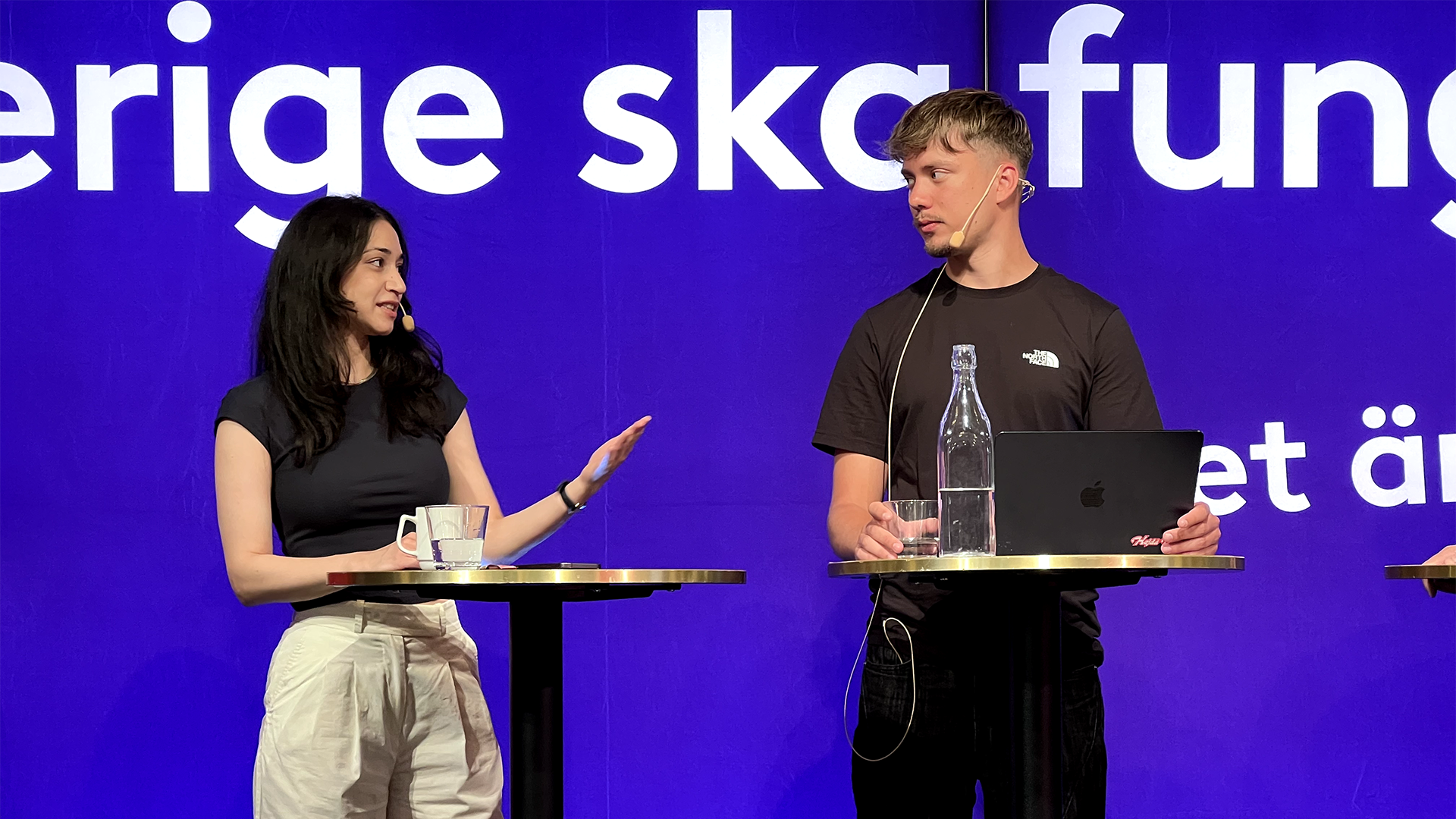
Image from the trade union organisation Katalys’ live podcast “Avgå Alla!” on the Swedish Trade Union Confederation (LO) stage in Almedalen 2026. Pictured from left: Zina Al-Dewany and Magnus Bjerg Sturm. Photo: Magnus Nilsson.